
In the realm of modern automation, machine vision lenses play a vital role. These lenses provide the clear images necessary for thorough analysis and decision-making across diverse industries.
The impact of machine vision lens quality on image clarity and processing speed cannot be overstated; it shapes the overall effectiveness of automated systems.
Industry-specific applications necessitate unique lens characteristics such as field of view, depth of field, and working distance, underscoring the importance of tailored evaluations for achieving optimal results.
Focal lengths can dramatically influence image clarity and perspective. Short focal lengths yield broader views but risk distortion, while longer focal lengths deliver higher magnification for more detailed endeavors.
Lens coatings improve imaging by minimizing reflections and boosting light penetration, crucial for preserving image quality over time.
Notable implementations of machine vision lenses in sectors like manufacturing have led to marked enhancements in defect detection and a boost in production efficiency.
As machine vision technology evolves, its integration with AI will become more pronounced, offering improved defect detection, data-driven insights, and customized solutions to tackle challenging industry demands.
Table of Contents
The Critical Role of Machine Vision Lenses in Modern Automation
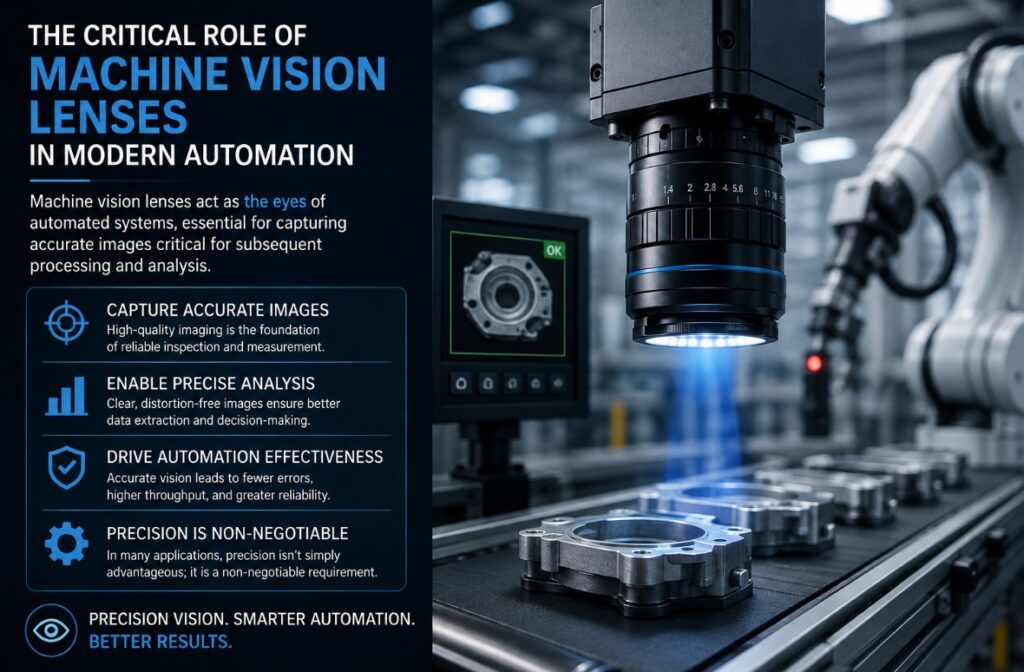
Machine vision lenses act as the eyes of automated systems, essential for capturing accurate images critical for subsequent processing and analysis. Each image must be precise and trustworthy since this significantly influences the effectiveness of robotic and automation systems. In many cases, the demand for precision isn’t simply advantageous; it is a non-negotiable requirement.
How Lens Quality Affects Overall System Performance
An essential factor in system output is the quality of the lens itself. It can be the differentiator between a clear, informative image and a blurry view leading to erroneous analysis. When manufacturers choose premium machine vision lenses, they frequently observe significant improvements in image clarity and processing speed. This, in turn, enhances decision-making and boosts operational efficiency.
- Sharpness: High-quality lenses minimize distortions.
- Contrast: Superior coatings enhance light transmission.
- Dynamic Range: Better lenses provide a broader range of image data.
Clearly, failing to select the right lens or overlooking lens deterioration can yield poor returns on investment. Organizations might be tempted by lower prices, but choosing cheaper options can often lead to significant unseen risks and reliability issues. Is it really worth sacrificing quality for the sake of saving costs?
Evaluating Lens Characteristics for Specific Applications
Not every lens is suitable for every use case; different settings call for distinct lens characteristics. For example, the variability of lighting on factory floors may necessitate adaptable lenses, whereas laboratories typically require lenses that can capture high magnification. Therefore, professionals underscore the necessity of assessing specific lens characteristics relative to the intended application.
- Field of View: Wider fields facilitate scanning large areas.
- Depth of Field: Crucial for maintaining clarity across variable object distances.
- Working Distance: This influences the integration space within automated systems.
Choosing the Right Machine Vision Lens: Factors to Consider
Selecting the appropriate machine vision lens is a detailed process, necessitating thoughtful evaluation of multiple parameters. Each detail serves an important purpose in achieving optimal image quality and performance. Those in the industry often engage in rich discussions based on their experiences regarding how to choose the right lens.
Focal Length and Its Impact on Image Clarity
Focal length stands out as a pivotal specification to consider. Understanding how it affects image clarity, distortion, and perspective is essential for success. Short focal lengths provide wider fields of view but may cause edge distortion. Conversely, longer focal lengths yield greater magnification and narrower perspectives. In certain imaging tasks, this distinction can be crucial.
“The right focal length can turn an average image into a precise one.”
So, how should organizations determine the ideal focal length for their uses? A few guiding factors include:
- Application Needs: Identify whether the emphasis is on detail or breadth.
- Distance from Subject: Factor in the working distance when selecting lengths.
- Environmental Factors: Be cautious of potential obstructions or space constraints.
Understanding Lens Coatings for Enhanced Imaging
The significance of lens coatings should not go unnoticed. They enhance imaging results by reducing reflections and improving light penetration. When professionals select machine vision lenses, the influence of coatings on overall performance and durability over time is a critical consideration. Without adequate coatings, lenses might experience issues like ghosting and flare, which can mislead image assessments.
- Anti-Reflective Coatings: These minimize reflections to provide clearer images.
- Scratch-Resistant Coatings: They enhance lens durability in harsh environments.
- Color Correction: Coatings that assist in maintaining color accuracy.
These elements, seemingly minor, often have a considerable impact on the final results. Quality manufacturers pay close attention to these coatings to deliver solutions that stand the test of time.
Innovative Applications of Inspection Lenses in Industry
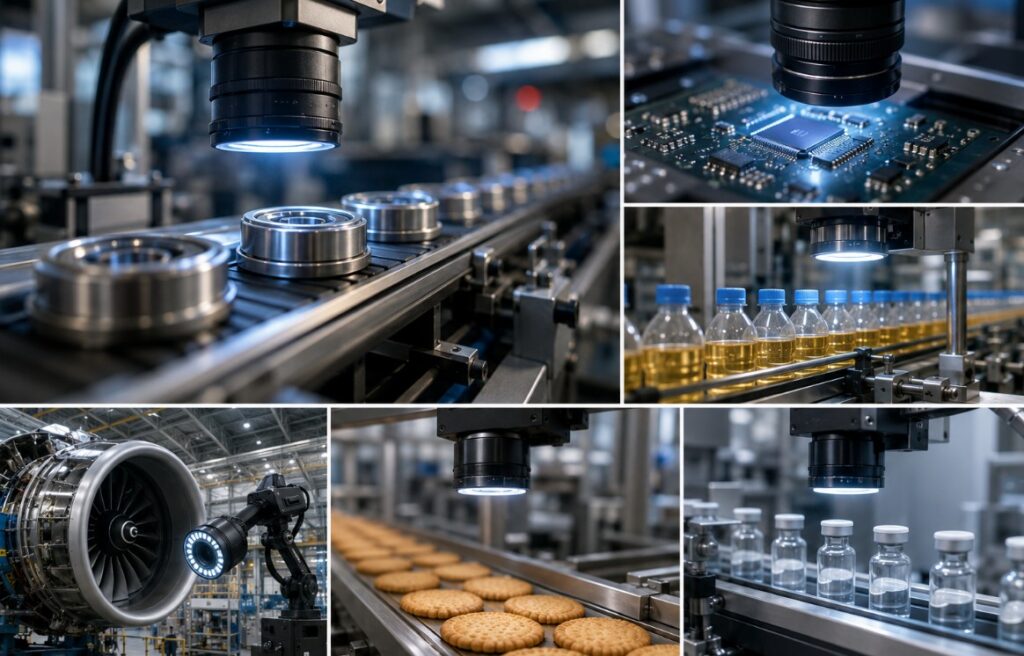
The landscape of machine vision lenses spans a wide array of applications, sparking innovation and transforming industries. These lenses have become indispensable tools for precision inspection, ensuring product quality across different sectors.
Precision Inspection in Manufacturing Lines
In the manufacturing arena, inspection lenses enable detailed scrutiny of products traversing the production line. Companies increasingly depend on these lenses to identify defects, ensuring only the highest-quality items reach consumers. The result? Enhanced brand reputation and reduced likelihood of costly recalls or repairs. With the right lens in place, precision achieves new heights.
- Density Checks: Safeguarding product integrity and compliance.
- Dimension Verification: Accurate measurements to prevent manufacturing errors.
- Surface Inspection: High-resolution imaging reveals surface flaws.
Clearly, the ability to carry out such inspections rapidly elevates overall production capabilities. The demand for optical systems that marry speed with accuracy has surged across the industry.
Case Studies: Success Stories of Lens Implementation
Examining various successful implementations reveals the concrete benefits that machine vision lenses can offer across industries. For instance, a semiconductor manufacturer incorporated high-end inspection lenses and achieved a remarkable 20% reduction in defects. When combined with advanced lighting techniques, this adjustment significantly boosted yield rates. Such instances affirm that strategic lens integration correlates with improved financial performance.
- Aerospace: Enhanced assembly line efficiency via precise lens technologies.
- Food Industry: Enhanced product safety through comprehensive quality checks.
- Pharmaceuticals: Greater accuracy in packaging inspections.
These success narratives strongly illustrate that investing in quality imaging solutions yields substantial returns in efficiency.
Future Trends in Machine Vision Lens Technology
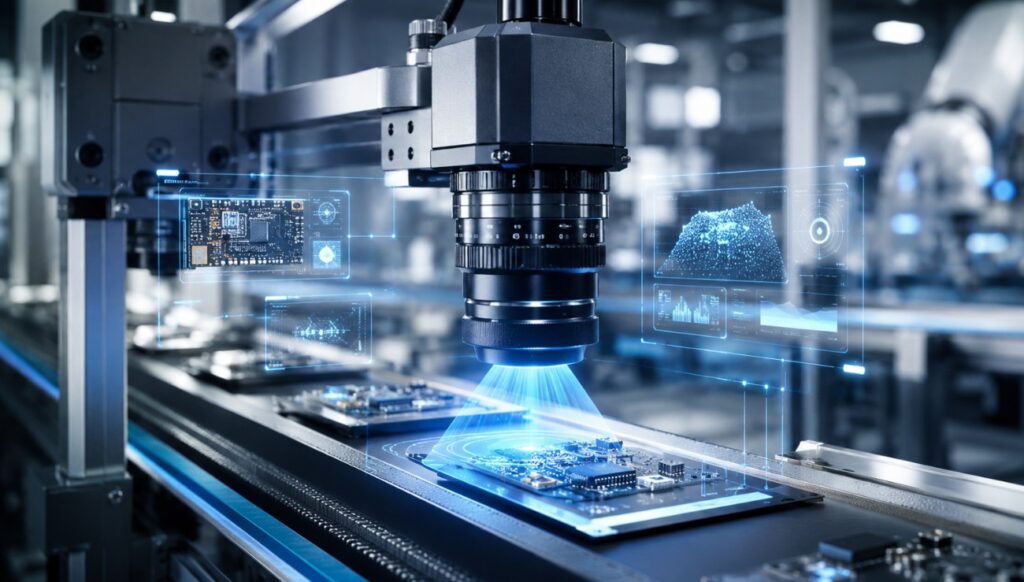
With technological advancements come new horizons for machine vision lenses. The future promises exciting innovations, primarily driven by the integration of artificial intelligence and modern techniques. Industry professionals look forward to an influx of groundbreaking changes in imaging solutions.
How AI is Shaping the Next Generation of Imaging Solutions
Artificial intelligence is transforming various sectors, and machine vision is no exception. Current AI algorithms can learn from captured images, significantly enhancing inspection capabilities. The result is more accurate defect detection and quicker response rates.
- Automated Quality Control: AI systems can analyze images for defects.
- Data-Driven Decisions: Machine learning enhances processes based on analytical insights.
- Predictive Maintenance: Early detection of potential failures through lens insights.
Through AI adoption, organizations are able to elevate their quality standards and operational efficiency to new heights. The implications for growth and profitability are vast.
The Rise of Custom Lens Solutions for Complex Challenges
As industries grapple with increasingly complex situations, custom lens solutions are becoming more central to operations. Off-the-shelf lenses aren’t always sufficient to meet specific imaging needs. Recognizing the efficacy of bespoke designs enables professionals to tackle unique requirements effectively, promoting product development and innovation.
- Tailored Solutions: Lenses crafted specifically for unique application challenges.
- Scalability: Imaging solutions adaptable to shifting production demands.
- Performance Optimization: Fine-tuning lenses to meet local conditions and industry specifications.
This ability to deliver customized solutions reflects a growing understanding of imaging technology and its various applications. Businesses seeking to remain at the forefront are proactively pursuing partnerships that offer tailored solutions.
FAQ
What industries benefit most from machine vision lenses?
Industries like manufacturing, aerospace, food safety, and pharmaceuticals have notably integrated machine vision lenses within their operations. Each sector has its unique needs, and these lenses fulfill them, enhancing both efficiency and product quality.
How does the choice of lens impact the total cost of ownership?
The appropriate lens can significantly lower the total cost of ownership by minimizing defects and bolstering production efficiency. Investing in premium lenses frequently results in reduced operational costs through enhanced product quality and less waste.
Can machine vision lens specifications be customized for specific projects?
Indeed, custom lens designs are increasingly popular as industries confront unique imaging challenges. Tailored solutions guarantee that equipment aligns seamlessly with operational needs, boosting performance.
What role do lighting conditions play in the performance of machine vision lenses?
Lighting conditions are vital for optimizing image capture. The right lens will adjust to varying illumination levels, enhancing clarity and detail. Inadequate lighting can negate even the best lens, highlighting the importance of a coordinated approach toward selecting the lens and designing the lighting system.
Are there specific maintenance practices for machine vision lenses?
Regular cleaning and protective measures are essential for sustaining lens performance. Dust, smudges, or scratches can deteriorate image quality. Following manufacturer guidelines is crucial to ensure longevity and to avoid unnecessary, costly replacements.
What’s the impact of AI advancements on future lens technology?
AI is expected to revolutionize lens technology by refining image analysis and defect detection. As these AI systems evolve, they can customize lens parameters according to specific applications, delivering unmatched accuracy and efficiency in diverse operations.
How do lens coatings affect durability and performance?
Lens coatings enhance resistance against scratches while also improving overall imaging quality by mitigating glare and reflections. Opting for lenses equipped with high-quality coatings can significantly prolong lifespan and ensure consistent performance, even in challenging environments.
What are the potential challenges when integrating machine vision systems?
Integration hurdles often stem from compatibility with existing equipment and the complexities of specific applications. However, with diligent planning and expert guidance, organizations can effectively navigate these challenges, resulting in successful system implementations.
Useful Resources
- Lamont-Doherty Earth Observatory – Columbia University
- Massachusetts Institute of Technology
- Weaving State University – Vision Research Lab
- University of Texas at Arlington – College of Engineering
- Tufts University – School of Engineering
- California Institute of Technology
- National Science Foundation
- Vision Systems Design – Industry News and Resources